
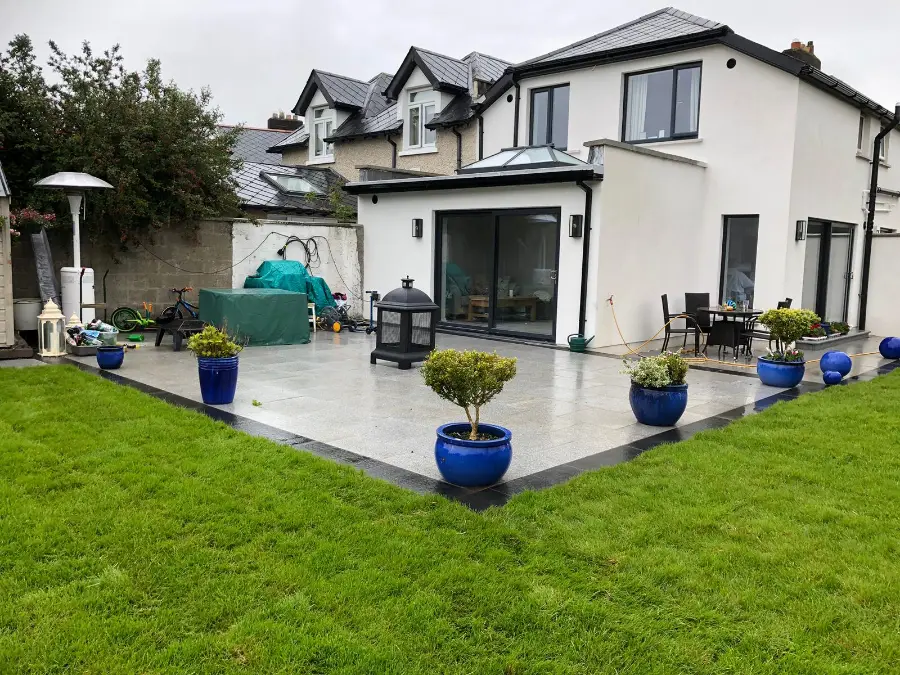
A patio is the one part of an Irish garden that earns its keep all year round. It is where the barbecue lives in July, where the pots go in spring, and where you can still stand with a coffee in November without sinking into wet grass. Get it right and it quietly pulls the whole garden together. Get it wrong and it becomes a slippery, weed-filled corner you avoid.
Ireland's weather makes patio choices a little different from what you see in glossy Mediterranean magazines. Rain, moss and long damp winters all matter here. So before you fall in love with a photo, it is worth understanding the materials and layouts that actually hold up in an Irish garden.
Choosing the right patio material
The material sets the tone for everything else: the look, the maintenance and the budget. Here are the options that perform best in Irish conditions.
- Porcelain paving. The most popular choice in recent years, and for good reason. Porcelain tiles are dense, frost-proof and almost non-porous, so moss and weeds struggle to take hold. They stay looking clean with very little effort, which suits busy households who would rather enjoy the garden than scrub it.
- Indian sandstone. A warmer, more natural look with lovely tonal variation from grey to buff. It ages beautifully and feels traditional, though it is more porous than porcelain and benefits from an occasional wash and reseal.
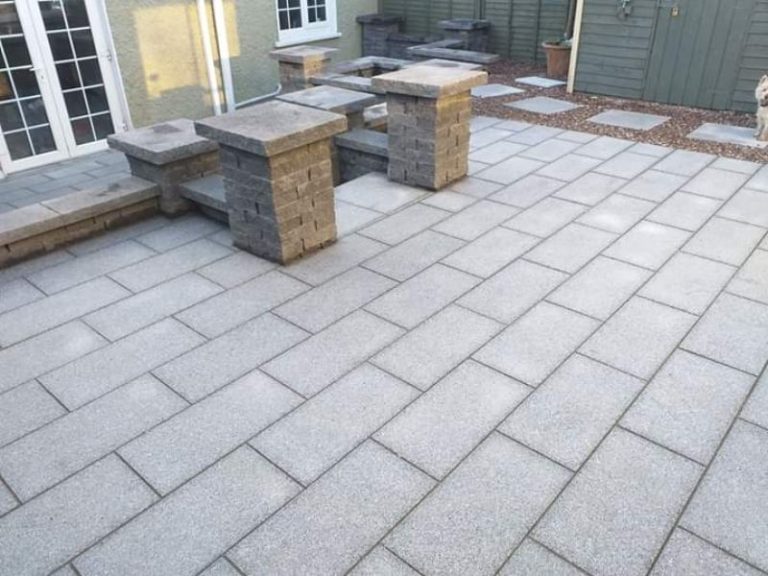
- Granite. Extremely hard-wearing and elegant, granite is the premium natural stone option. It handles Irish frost without complaint and pairs well with contemporary and period homes alike.
- Cobblelock and concrete blocks. The workhorse of Irish gardens. Affordable, available in countless colours and patterns, and easy to repair if a single block is ever damaged.
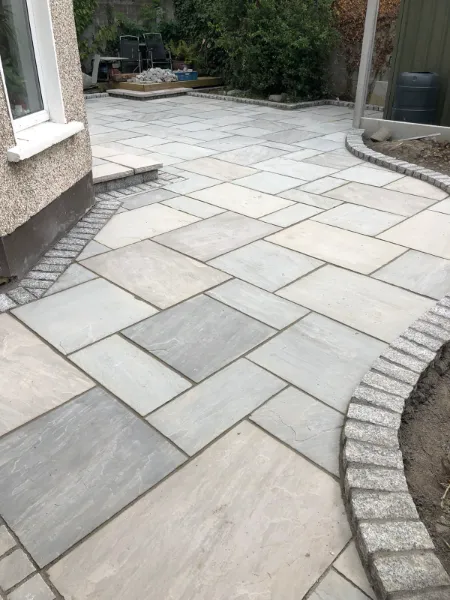
Layout ideas that work in real gardens
Materials aside, the layout is what makes a patio feel considered rather than just paved over. A few ideas worth stealing:
- Frame a lawn. A rectangular patio wrapping around a crisp central lawn gives you clean lines and a clear "room" feel, with paths leading off to borders and beds.
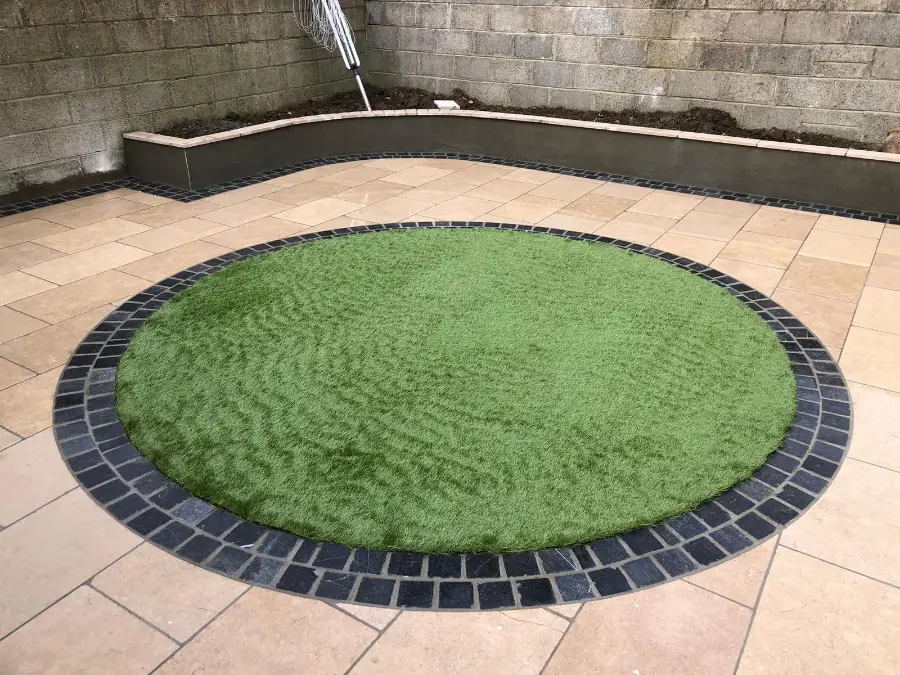
- Create a circular feature. A circular lawn or seating area set into contrasting paving breaks up a square garden and draws the eye to a focal point.
- Build in seating. Low raised walls and built-in benches around the edge of a patio save space and give you somewhere to sit that never blows over in an Atlantic gust.
- Zone with materials. Mix a smooth porcelain dining area with a cobblelock path or a gravel border to gently separate spaces without walls.
Don't forget the boring bits: drainage and base
The part nobody photographs is the part that decides whether your patio lasts. In an Irish garden, water is the enemy. A patio needs a proper compacted sub-base and a slight fall (usually running away from the house) so rain drains off rather than pooling. Skip this and you get standing water, moss, and slabs that lift over the first few winters.
This is also where the material choice and the groundwork meet. Porcelain, for example, is almost always laid on a full mortar bed rather than loose sand, precisely because it needs that stable, well-drained foundation to perform.
DIY or a professional?
A small, level cobblelock patio is a realistic weekend project for a confident DIYer. But once you are dealing with porcelain, natural stone, awkward levels or drainage across a larger area, the groundwork gets serious quickly, and mistakes are expensive to undo. It is the same trade-off we looked at in our guide to building a tarmac driveway yourself or with a professional.
If you would rather have it done properly the first time, it is worth talking to a specialist. In the Dublin area, Driveways & Patios Dublin design and install patios in porcelain, sandstone, granite and cobblelock, covering everything from a simple seating area to a full garden makeover across Dublin and Meath. They handle the base, the drainage and the finish, which is exactly where a patio is won or lost.
A patio worth sitting on
The best patio is the one that matches how you actually use your garden: a low-maintenance porcelain terrace for a busy family, a characterful sandstone corner for a period cottage, or a cobblelock all-rounder that stretches the budget further. Pick the material for your weather and your maintenance patience, plan the layout around a focal point, and get the groundwork right. Do that, and you will have a space that earns its place in the garden for decades.