
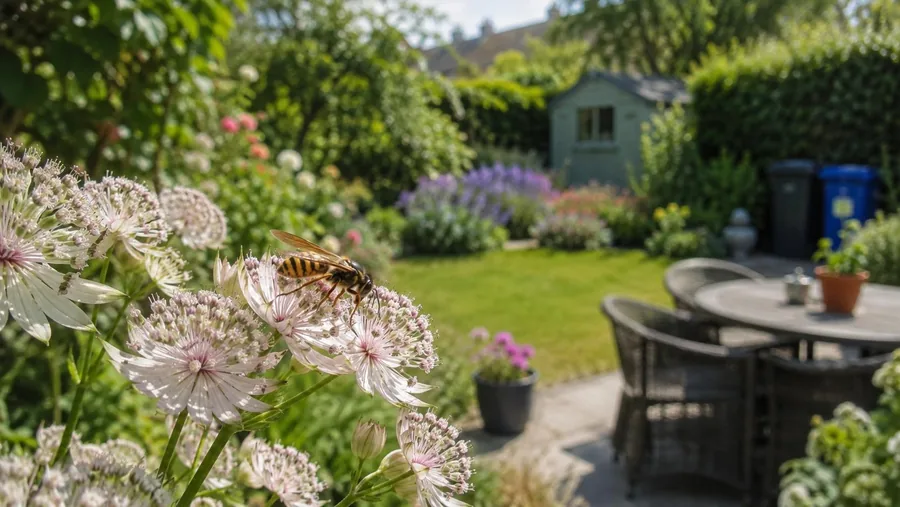
A healthy Irish garden is full of life. Some of that life is welcome. Some of it will eat your lettuce. And some of it may eventually decide that the warm kitchen behind the back door looks considerably more appealing than the compost heap.
The important thing is knowing the difference.
Not every insect, bird or small animal you spot outdoors needs to be treated as a pest. Many garden visitors pollinate plants, feed on other insects or simply form part of the local ecosystem. Others, particularly rats, mice or an active wasp nest close to where people spend time, deserve a little more attention.
So before declaring war on everything that moves, here is how to work out what needs action and what can usually be left alone.
Bees: Usually Welcome Guests
Seeing bees around flowering plants is normally a very good sign.
Bees are important pollinators and may visit gardens in large numbers when lavender, fruit trees, herbs and other flowering plants are in bloom. Several bees moving between the same row of plants on a sunny afternoon is normal garden activity, not an infestation.
The situation becomes more complicated when you notice insects repeatedly entering a cavity in a wall, roof or shed and you are not sure whether they are bees or wasps.
Identification matters. Do not block an entrance or start spraying chemicals simply because insects are flying around it. If their location is causing concern, particularly near a door, window or busy seating area, get advice before taking action.
Wasps: Location Matters More Than Their Mere Presence
One or two wasps visiting your garden does not automatically mean you have a problem.
Wasps are common during the warmer months and may appear around flowers, ripe fruit, bins and outdoor food. If you are eating lunch outside in August, a wasp showing an unreasonable level of interest in your sandwich is irritating, but it does not necessarily justify pest control.
What matters is repeated activity.
If wasps are constantly flying into and out of exactly the same gap, there may be an active nest nearby. Typical locations include:
- under roof edges or tiles;
- inside sheds;
- wall cavities;
- attic spaces;
- sheltered parts of garden structures.
Imagine that every few seconds another wasp disappears through a small opening above the back door. They are probably not just admiring the brickwork. That repeated traffic is a much stronger indication of a nest than seeing the occasional wasp around flowers.
The position of the nest matters too. A nest well away from people may not require immediate action. One beside a patio, doorway, children's play area or frequently used shed is more likely to create a safety issue.
Do not disturb an active nest yourself. If activity is close to people or the nest is difficult to access, professional assessment is the safer option.
Ants: Garden Residents Until They Start Moving Indoors
Ants often look more dramatic than they really are.
A trail across paving or activity around plants is usually just part of garden life. They become more relevant when those trails lead towards the property or ants repeatedly appear inside kitchens and food storage areas.
For example, a few ants around the edge of a patio are unlikely to justify much concern. A steady trail disappearing through a small crack beside the kitchen door and reappearing along the skirting board deserves closer attention.
Simple prevention can help. Keep food covered, clear crumbs and spills after eating outdoors and pay attention to obvious gaps around doors and walls. If activity continues indoors, the important next step is identifying where the ants are entering and where the colony may be located.
Slugs and Snails: Annoying, Yes. Pest Control Emergency, No.
Anyone who has tried growing lettuce in Ireland has probably developed fairly strong opinions about slugs.
They can damage vegetables, seedlings and ornamental plants surprisingly quickly, particularly after wet weather. But slugs and snails are gardening pests rather than the sort of problem that normally requires a professional pest control company.
The response here is generally good garden management. Check vulnerable plants regularly, reduce unnecessary damp hiding places around pots and beds, and use gardening methods suitable for the plants you are trying to protect.
A few holes in the hostas may be frustrating, but you can probably leave the pest control phone number alone for this one.
Spiders: Generally Better Left Where They Are
Spiders get a worse reputation than they deserve.
In gardens, they help control flies and other insects. Unless you are dealing with something unusual, they are generally best left alone.
The same applies to many beetles and other small creatures hiding beneath pots, stones or garden furniture. A useful rule of thumb is that seeing an insect outdoors does not automatically mean you have an infestation.
Gardens are supposed to contain insects.
Rats: A Garden Visitor Worth Investigating
Rats are different. A single rat passing through does not automatically prove there is an established infestation, but repeated sightings should not simply be ignored.
Gardens can provide rodents with several things they are looking for at once: food, water, shelter and quiet places to hide.
Common attractions include:
- accessible rubbish or poorly sealed bins;
- food waste;
- spilled bird seed;
- pet food left outdoors;
- dense vegetation and clutter;
- sheds and storage areas;
- spaces beneath decking or garden structures.
That last point is worth remembering when you are planning hard landscaping. A properly laid patio on a compacted base leaves far fewer voids to burrow into than raised decking with open sides, which is one more argument for getting the groundwork right the first time.
Take a typical Dublin back garden with a shed, bins beside a wall and a bird feeder over the lawn. If seed regularly falls onto the ground and the bins are easy to access, the garden can become a reliable feeding area without the homeowner intending it.
The useful question is not simply, “How do I get rid of the rat?” It is, “Why does the rat keep coming here?”
Repeated sightings, burrows, droppings, gnawing or regular activity around sheds and bins are stronger reasons to investigate. Removing accessible food, managing waste properly and checking the property for possible access points are important parts of prevention.
If rodents are regularly appearing close to the house, getting professional pest control in Dublin can help establish whether the activity is confined to the garden or connected to a wider problem around the property.
Mice Around Sheds and Outbuildings
Mice can also settle around gardens, sheds, garages and storage areas.
A shed containing bird food, grass seed, pet food or other edible materials provides both shelter and an easy meal. You may first notice small droppings, damaged packaging or signs that stored food has been disturbed.
The bigger concern is when activity moves closer to the house.
Mice can use surprisingly small gaps around pipes, doors, vents and older building materials to get inside. In terraced houses and apartment developments, shared structures can also create routes that are not immediately obvious from the garden.
If you repeatedly find signs of mouse activity near the property, finding those access points is just as important as dealing with the mice already present.
What About Birds?
Birds are an important part of an Irish garden and, in most cases, exactly the kind of wildlife you want to encourage.
What is worth watching is how you feed them.
A bird feeder does not only attract birds. Seed dropping onto the ground can provide an easy food source for mice and rats, particularly if it accumulates underneath the feeder day after day.
You do not necessarily need to stop feeding garden birds. Instead, keep an eye on spilled food, avoid leaving large quantities sitting on the ground and store bags of seed securely, particularly in sheds or garages.
Sometimes the “bird problem” is not the birds at all. It is the free buffet underneath them.
Your Garden Does Not Need to Be Pest-Free
Trying to create a completely pest-free garden would be both unrealistic and undesirable.
Bees, spiders, beetles, birds and countless other species belong there. The sensible approach is to look at behaviour, numbers and location.
- A bee visiting lavender? Leave it alone.
- Ants wandering across the patio? Probably nothing to worry about.
- Wasps repeatedly entering the same hole above the back door? Worth investigating.
- Rats appearing regularly beside the bins? Find out what is attracting them.
- Mouse droppings appearing inside the shed? Check your stored food and possible access points.
The goal is not to remove every creature from the garden. It is to recognise when ordinary wildlife activity starts becoming a hygiene, safety or property problem.
When Should You Get Professional Advice?
Consider professional advice when rats or mice are appearing repeatedly, rodents may be entering the house, you find droppings or gnawing, wasps are continually entering the same location, or an active nest is close to people.
It is also sensible to get help when pest activity continues despite removing obvious food sources and taking reasonable preventive measures.
A proper inspection can establish what is actually happening before treatment is considered. That distinction matters. Good pest management is not about treating everything in sight. It is about identifying the problem, understanding why it is happening and choosing an appropriate response.
And sometimes the appropriate response is simply to leave your garden visitors alone and let them get on with it.